We’re Atlassian’s Partner of the Year 2026 Co-Selling Excellence and Cloud Transformation Services
Read more
Skip to main content
Why fear of ITSM change is your organisation's biggest risk
Share on socials

The cost of standing still: why fear of ITSM change is your organisation's biggest risk

Deniz Timartas
Deniz Timartas
Published on 27 May 2026
10 min read
weighing scales
Deniz Timartas
Deniz Timartas
Published on 27 May 2026
10 min read
Jump to section
Scenario: The organisation that knew it had a problem
Why enterprise organisations freeze
The hidden cost of the status quo
What "too complex to migrate" usually means
Reframing the decision

Explore the hidden cost of staying on legacy ITSM platforms — from AI readiness gaps and technical debt to vendor lock-in, poor productivity, and reduced agility.

Scenario: The organisation that knew it had a problem

Picture this. A CIO at a major financial services firm knows, without question, that their ITSM platform is failing them. Licensing costs spiral upward year on year. The vendor's roadmap no longer aligns with where the business needs to go. Teams have built sprawling workarounds that no single person fully understands. Yet, when the question of change is raised at the leadership table, the conversation ends in the same place it always does, "Now isn't the right time." This isn't a hypothetical. It's one of the most common stories we hear. And the tragedy is that the cost of standing still—of choosing inaction—is rarely calculated with the same rigour as the cost of a transformation project.

Why enterprise organisations freeze

It would be easy to dismiss hesitancy around ITSM change as organisational inertia or leadership timidity. But the reality is more nuanced—and more understandable. Organisations don't stay on platforms that frustrate them because they lack ambition. They stay because the perceived risk of disruption outweighs the perceived pain of the status quo.
There are typically three forces at work here:

The sunk cost trap

Years of customisation, integration work, and process design represent an enormous investment—financial and human. This creates a classic sunk cost trap: the tendency to continue investing in a failing course of action because of the resources already committed, rather than making decisions based on future value. Leaders who championed the original implementation have a particular incentive to protect the narrative that the platform still works. The result is that real problems get minimised, and the business case for change never quite gets the serious hearing it deserves. Organisations therefore should look within, take a step back, dissect reasons stakeholders have shared and think, are we taking the easy route for short-term mediocre output.

The change fatigue effect

Large enterprises are perpetually mid-transformation. There's always another programme of work competing for attention, budget, and change capacity. ITSM rarely sits at the top of the strategic agenda—it's the infrastructure that makes everything else work, and it tends to be noticed most when it fails.
Organisations should look to ringfence ITSM as a strategic transformation that is an enabler of other programmes across the organisation. The transformation project should be tackled incrementally, modernising high-impact areas first rather than attempting a single, high-risk overhaul. This keeps the momentum and agility, in case priorities change temporarily.

The gradual loss of adaptability

Over time, the platform doesn’t just shape processes—it shapes behaviour. Teams begin to design around limitations rather than challenge them. Workarounds become standard practice. Change feels difficult, so it’s avoided. The organisation gradually loses its ability to adapt. What should be straightforward improvements turn into complex initiatives, requiring disproportionate effort and coordination.
This isn’t just a tooling issue—it’s an operating model problem and a cultural challenge. When your core service platform resists change, the business does too.

The hidden cost of the status quo

When organisations evaluate the cost of ITSM change, they typically produce a detailed business case: migration costs, downtime risk, training, professional services, productivity impact during transition. It's a thorough exercise. What's almost never produced with the same rigour is a business case for staying. That's a significant blind spot.
The costs of ITSM stagnation are real, but they're diffuse and slow-moving—the kind that don't trigger an incident report or show up cleanly in a quarterly review. They accumulate quietly, until they don't.
Let's take a look what truly is at stake:

Talent and productivity

When service management tooling is clunky, slow, or requires constant workarounds, it erodes the experience of every person who touches it, from IT teams to the employees raising requests. The best IT professionals, who have choices about where they work, are drawn to organisations with modern tooling and clean ways of working. Legacy ITSM platforms are increasingly a talent problem, not just a technology problem.
Although many talented IT professionals would relish the challenge of a transformation project, they may not see maintaining an inept system as rewarding or a good use of their skills. Poor tooling should not be seen as an operational inconvenience, but as a direct risk to retention, productivity, and long-term capability.

AI readiness—or the lack of it

This is where the stakes are highest, and where the gap between modern and legacy platforms is widening most rapidly. According to Atomicwork's State of AI in ITSM 2025 report, AI adoption is quickly becoming a baseline expectation: more than half of organisations are already using it for data analysis, and nearly half for end-user assistants and incident management. Organisations on platforms that can't natively integrate these capabilities aren't just missing out on efficiency gains—they're not accessing benefits that could truly level up their capabilities. The longer you wait, the wider that gap becomes, and the harder it gets to close.

AI adoption is quickly becoming a baseline expectation: more than half of organisations are already using it for data analysis, and nearly half for end-user assistants and incident management.
Atomicwork State of AI in ITSM 2025 report

Technical debt that compounds

Every workaround added to compensate for platform limitations is simply future work deferred. Undocumented customisations become growing risks as the people who built them move on. And every manual process that should be automated turns into a cost that repeats indefinitely.
This kind of debt doesn’t resolve itself—it compounds over time. Resulting in the hidden cost in question

Vendor leverage

Organisations that are deeply embedded in a platform—through customisation, integration, and internal dependency—lose negotiating power over time. Renewal conversations become increasingly one-sided. Price increases are accepted because the alternative feels too disruptive to contemplate. This dynamic is particularly pronounced in enterprise ITSM, where some vendors have structured their commercial models around precisely this kind of lock-in.

Strategic agility

Perhaps the most consequential cost of ITSM stagnation is the one that's hardest to quantify: the strategic options you don't pursue because your service management foundation can't support them. When IT is constrained by its tooling, it becomes a hindrance rather than an enabler. The organisations best positioned for the next wave of change—whether that's AI-driven automation, enterprise service management, or something we haven't yet anticipated—are the ones who've already built a modern, flexible service management foundation. With a culture that is equipped to adequately manage change.

What "too complex to migrate" usually means

One of the most common objections to ITSM change—particularly at enterprise scale—is the assertion that the current environment is simply too complex to migrate. The integrations are too deep. The customisations are too extensive. The business processes are too entangled with the platform to safely extract them. This deserves honest scrutiny.
In our experience working with organisations through ITSM transformations, "too complex to migrate" is sometimes accurate—but more often, it's a reflection of how the risk is being framed, not an objective assessment of what's actually possible. Complexity is real, but it is manageable when approached methodically, with the right expertise and the right tooling.
More importantly, it's worth asking what the complexity itself tells you. Platforms that require extensive customisation to meet standard enterprise requirements are, by definition, poorly matched to those requirements. The customisation that makes migration feel difficult is the same customisation that makes day-to-day operation expensive, brittle, and dependent on specialist knowledge. If your environment has reached a point where no single person fully understands it, that isn't stability—it's accumulated risk.
Modern platforms are designed with extensibility and configurability as core principles, not afterthoughts. What requires bespoke development on legacy platforms is increasingly achievable through configuration—which means migrations that once felt genuinely daunting are becoming significantly more tractable.

Reframing the decision

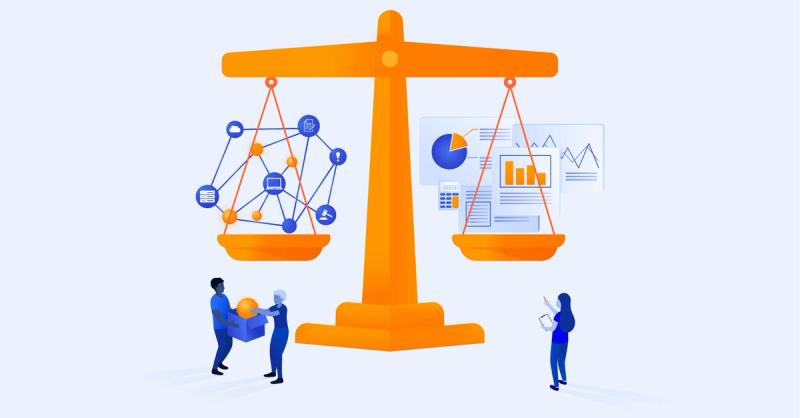
Stop evaluating ITSM change as a technology project. It's a strategic risk decision — and the question isn't "can we afford the disruption of migration?" It's "what is the compounding cost of not changing?"
When you factor in the AI capability gap, the talent implications of legacy tooling, escalating technical debt, and the negotiating leverage you progressively cede to your vendor, the calculus shifts. The organisations that get this right don't wait for a crisis. They move because they can see clearly where the current trajectory leads — and they act while the choice is still theirs to make.
The migration itself is more navigable than the narrative suggests. What isn't manageable is indefinite stagnation. Standing still is a decision. Make sure you've actually cost it.
MRI Software logo

ServiceNow to Jira Service Management transformation

MRI Software made this journey — from ServiceNow to Jira Service Management — and came out with a simpler, more cost-effective, and more capable environment.
Written by
Deniz Timartas
Deniz Timartas
Senior Strategic Advisor at Adaptavist
Deniz has over 8 years' experience in the Atlassian ecosystem. In that time he has honed his skills within the Service Management sphere, whilst acquiring ITIL Master and Atlassian Certified Expert qualifications, that he has leveraged to support many customers with their transformation projects.