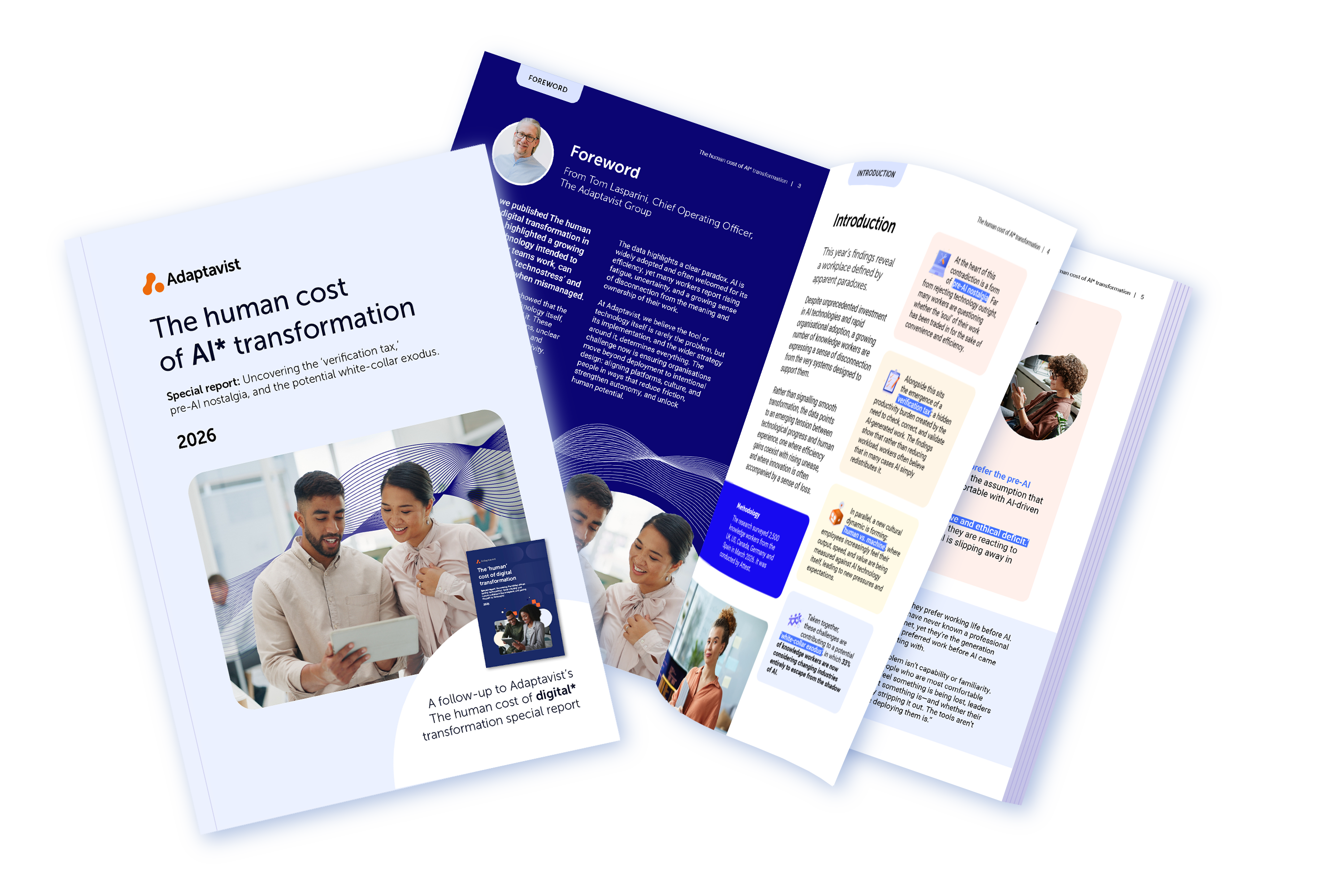
One of the big questions the report raised was whether the need to check, correct, and validate AI-generated work is simply redistributing, rather than lightening, team workload. In our report, we refer to this as ‘the verification tax’.
Our research shows that 42% of workers spend more time verifying AI output than they save using it, and 52% regularly correct AI-generated work from colleagues. But according to Jobin, we might already be on a downward curve with product vendors and businesses trying to find ways to eliminate the verification tax.
“A lot of companies that have tried to adopt AI have done so on the left side of the Software Development Life Cycle (SDLC), which is mostly the coding part," explains Jobin. “So people are spending time verifying the code that’s written. But we’re going to see the verification tax come down, because a lot of the platforms, whether it’s Atlassian, GitLab, or Datadog, are building AI into the other side of the cycle – the testing, building, and releasing part – to make that easier. You still need to human oversight and expertise, but with less manual work as before."
Companies are aware of the shifted burden being placed on teams and are starting to reassess their SDLC in light of it. “A lot of the research shows that AI magnifies what your company is already doing,” says Jobin. “So if you're doing things wrong, those problems are going to become even bigger with AI tools involved. Leading organisations are sorting out their foundations first, whether that’s in terms of data, infrastructure, or implementing DevOps processes. That way, they have the right foundations to take that leap with all the AI-enabled features these vendors are putting out."